Tuesday, 31 July 2018

Submerged in Sommerso glass

It's strange how things work. Sometimes you don't find a single Sommerso vase for months, sometimes you find three on the same day! I hadn't seen any Murano Sommerso vases in ages, and suddenly I find SIX pieces in less than a month time. So weird. But obviously you don't hear me complaining, as they are beautiful!

Here's the thing: sometimes I wish I started collecting these glass Murano vases instead of collecting West German pottery. The clean lines, the strong colours, the way the light falls through a row of them in the window sill. Just stunning. 

Murano Mandruzzato vases

Sommerso is Italian for Submerged. And that's a pretty great description of what these vases actually are: a colour of glass submerged in another colour of glass. Sommerso vases, as far as I know, always have at least two layers of glass: a coloured layer on the inside, and a clear or a very light coloured layer on top. (And for those of you who are now thinking: "but I have a Sommerso vase in my collection that is entirely PINK, and PINK ONLY", darn it, I knew they would be there, but couldn't find them on Google!). Many of the vases have more than one coloured layer, I've seen vases with as many as three or four colours. The extra layers mostly seem to be yellow or blue, but I've seen a few with a light purple or green layer. 

I'm not entirely sure why they use these colours. I can imagine that it's because they show the main colour of the item in the best possible way. Another reason could be because of the contrast with the most used colours of Murano Sommerso glass: red, green and blue.

Fun fact: sometimes the yellow layer glows in the dark! Now, I don't own a black light, so I can't test this out, but there are vases that used uranium glass for the yellow layer.

The particular vases I'm talking about in this post are clean lined: diamond shaped or square. There are also bowls and ash trays to be found. They are often described online as Mandruzzato style, or designed by Flavio Poli. I never really knew what that meant. Were those makers/designers? Or was Mandruzzato an Italian term for something, like Sommerso is?

So, I did a little bit of digging. All the following information comes from other websites, so please keep in mind that the internet is not as reliable as well researched books. But I have put quite a bit of time in this, and they are good sources so I promise it will be a worthwhile read*

Mandruzzato is the name of a glass making family. Mandruzzato glass works was started in 1956 on the isle of Murano by Luigi Mandruzzato. In 1965 his son Gianfranco joined the firm. From 2000 his son Alessandro took over the company. (sources: here, here, here). The company website http://www.mandruzzato.ve.it/ sadly seems to be no longer functioning, but Alessandro's website is:

They specialized in these layered, faceted pieces. Based on a forum posts byAlessandro in 2009, it looks like they made these vases for quite a while.  Older pieces have an amber layer, later pieces a yellow layer. And apparently the outer layer is crystal! I never knew this.

One of the vases I found last week had the original Mandruzzato label! It even shows some of the shapes that were available.  In two forum posts (post 1, post 2) Alessandro mentions some names: the diamond shaped vase is called S. Marco. The general name of this line of pieces seems to be Molato (bevelled in English).

Mandruzzato label


I have seen a lot of other labels as well. Some examples are: VAM, VMP. I'm not sure if these were generic Murano labels, or other factories who copied the design by Gianfranco Mandruzzato. One of the labels I have seen was from Campanella, a company that mostly made millefiori glass.  In addition to these faceted (copies?), they made another type ofvase that I find very pretty, with two smooth and two textured edges. Confusingly enough, these are often also described to Mandruzzato in the online stores. I couldn't find out if if Mandruzzato also made these, or if that is just a later erroneous attribution.

Campanella vase


Finally, I want to come back to Flavio Poli. He was a designer for the company Seguso. They did make Sommerso vases, but in a much more organic shape. The "bow" vase is one of the designs that is attributed to him. One of his vases is included in the MoMA! But it does look like he has nothing to do with the facetted vases.

Flavio Poli for Seguso vase


To make things even more complex, companies from other countries made similar kind of vases: Strömbergshyttan made some organic Sommerso vases, but also a very similar square model in earthy tones. The German company Harz Kristall made a sort of up side down version in dark blue and red, that are very similar. Pavel Hlava's glass vases are not identical, but again, very similar.

Wow, that was a lot of info! It is a very confusing subject. For me the conclusion is that I think they are all beautiful, but you shouldn't necessarily believe the classification you see in webstores. I will go back to my current listings, and update them with all this new info!


If you have more information to share on this subject, I would love to hear it! You can send me a message, or leave a comment below.

*Mark Hill, when will you write a book on this subject? I would totally buy it!

Wednesday, 30 May 2018

Holes and Slashes - on Sgrafo Modern

Don't you love how versatile the West-German vases are? They can be bold and colorful, Organic and natural, but also sleek and elegant.

I also love it when I find something new, something I have never found in the wild before. A few weeks ago I was at a local thrift store that I don't visit often, because it is about a 30 minute bike ride away. Even though it's far, I have found some great things there (like a vintage Moschino blazer for 2 euros!), although not necessarily a lot of vintage pottery.

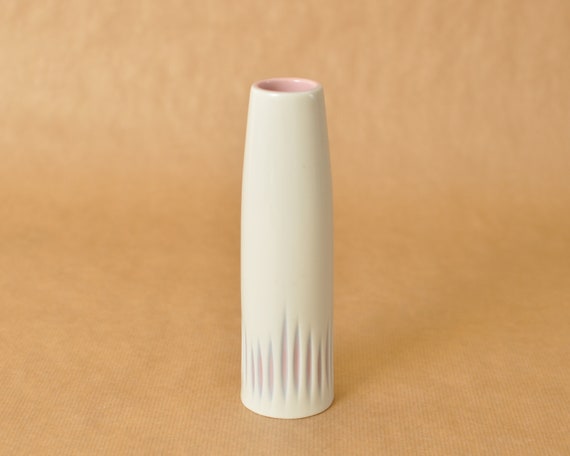
This time, however, I spotted the cutest little vase. A small, delicate but modern, white porcelain vase with slashed details in pink and gray. I could see it had some age, and it is stamped Sgrafo Modern.


The slashes in this little vase reminded me of the paintings by Lucio Fontana.

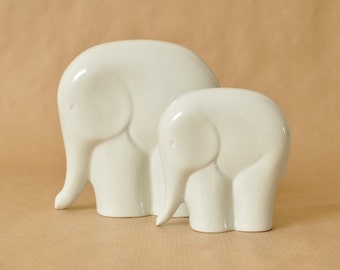
In the past I have had some elephants by Sgrafo, which were really cute. Like this vase, they were really high quality porcelain: beautiful design, and nicely made.

Sgrafo atelier - Set of 2 white porcelain elephants - mid century modern - West Germany - German

Anyway, I decided to bring the little vase home. Time for some research!

The West-Germany pottery bible Keramik der 50er Jahre by Horst Makus told me that this vase was designed by Peter Müller, who took over the Sgrafo factory from his father, together with his brother, in 1955. On the website sgrafo.blogspot.com I found some additional information about the slices in the vase:

He developed a new technique of making porcelain […]. He put two, to three layers of porcelain (with varying colours) on top of one another and then notched into the material. This method allowed the different colors of the layers to become visible. This patented technique is called sgrafo, and he was the only one who realized it in the 50s and 60s.

Now, let's go back to Lucio Fontana for a minute. In 1949 he started on what would later become the series Buchi (holes) and Tagli (slashes): monochrome (mostly white or gray) paintings with holes or slashes in the surface. He would often place a dark layer on the reverse of the canvas, so the darkness would show through the perforation. The Buchi started in 1949, the Tagli in the mid-1950s.
Lucio Fontana - Concetto Spaziale Attesse
Lucio Fontana - Concetto spaziale, Attese


Sounds sort of similar, right?

Now, I'm not saying Peter Müller stole or even borrowed the idea from Fontana. In art and science it often happens that similar ideas pop up around the same time. Personally, I love that this happens! Even if the paintings were an inspiration, the sgrafo vases are beautiful in their own right. (By the way, Lucio Fontano actually made ceramics, and they are mostly very different, much more organic! )

Sgrafo is no longer in existence today. In 1995 Peter Müller retired. It was succeeded by the company ASA who make stylish, often white, ceramic housewares.

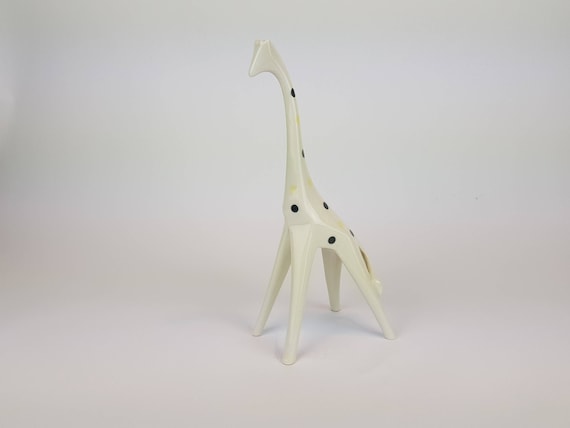
Some browsing on Etsy showed me that Sgrafo also made a wonderful little giraffe! I would love to come across one of those!

 Sgrafo giraffe

Wednesday, 28 March 2018

Mixing it up

A few weeks ago, my mixing bowl broke. It was a white stoneware bowl by the German company Asa. I have had it since I was in uni (so yes, I have had it for a long time...), and it has served me well: I love to bake, so it was used as an actual mixing bowl, it functioned as a salad bowl, and every now and then as a crisps bowl.

I found myself at a certain Swedish retail giant, about to purchase a new bowl. Suddenly it struck me: as a vintage lover, and occasionally seller, it seems absurd to buy a new, uninteresting, generic bowl.

We all know consumerism is killing the planet, right? In very short it means we need to buy less new stuff. Buying vintage makes that  possible, as it gives items a second chance. I love that about vintage.

I walked out of the store without a bowl and decided I will hunt for a great vintage one.

A quick online search showed me there are so many beautiful examples, like this ceramic bowl by Figgjo Flint, this enamel bowl by Finel, l or even this glass nesting set by Pyrex! I was thinking about using the yellow Italian fish bowl in my shop, but have decided against it because of the grooves in the pattern. 


As vintage aficionados, my husband and I buy many things vintage or second hand, but this mostly translates to decor and some furniture (And books. So many books - sorry hun).  In addition we have been buying high quality new items, with a classic design that will last for a long time, such as high quality pots & pans and a good cutlery set. One of my favorite Christmas gifts from my husband was a baby blue Le Creuset casserole pan. We have been using it for years. It is an absolute joy to cook in, also thanks to the fun color.

While I am on the hunt for the perfect mixing bowl, I'm also looking at other areas where I can buy vintage. Kitchenware is an easy one, because there is a lot of it around, and it can be cleaned easily. I'm also looking at vintage and second hand clothes, and I can tell you that it takes some effort, but there are amazing bargains to be had (hello vintage Moschino blazer for less than 5 euros!).

Of course I realize that these are only small steps, but it is good to think about this. The older I get, the more I start to ponder these things. If you have any tips about other things that can easily be bought vintage or want to share some amazing finds, I would love to hear!

If you are looking for cool vintage items to use in YOUR home, have a look at what I currently have on sale.

Wednesday, 9 August 2017

Pulling in the Reins

Soon after I started collecting West-German Pottery, I learned about Ruscha wall plates. They are stunning, and I loved the idea that you could have a ceramic painting on your wall. Long story short, I wanted one. Even more specifically I wanted the large Ruscha wall tile with horses and a chariot, as the oranges and blues against the copper background are so pretty, and it such a strong image.


Back then, I was a student without a car, so my budget and hunting grounds were limited. After a few months, I got lucky and found a relatively cheap one online. My then boyfriend was so kind to drive me to Amsterdam to pick it up. The man who sold it had an AMAZING mid-century modern interior, which became my new interior decorating life goal if I ever got a real adult house.

When I proudly showed the tile to my parents, my dad told me that his parents had the exact same tile in their hallway! I must have seen it a hundred times, and it might have subconsciously influenced my style later, but I have to admit I couldn't actively remember it. My grandparents had a beautiful interior, with many antique pieces, but I love the fact that they were hip enough to have had some West-German pottery as well!

Nowadays, my grandparents' tile hangs in my parents' house. My tile had pride of place in my student room, and also in my later homes. It currently hangs in my "library".

A few birthdays ago I was surprised to find that there are variants of this wall tile, as my parents gifted me a beautiful vertical variant. (If you have read more of my blog, you'll know that my parents are the best Birthday Gift Givers ever, and many of the best pieces in my collection are thanks to them.) My collection got expanded with a tile with only the horses as well.


As much as I love all three tiles, I do think the design with the four horse chariot is the best. For me it is an iconic Ruscha item, and I love that the design has its roots in history. As far back as Egyptian times, there are depictions of horse chariots, as you can see here. Scheurich and Jopeko also made vases with this design. I think it was one of the designs on wall times that Ruscha produced most, as you see it reasonably often. 

Last year I was surprised at a flea market to find another version of the four horse chariot design, but this time with a light background! I hadn't seen that color combination ever before, but it works really well. 


For a few months this has adorned my walls with the other tiles, but as I was surprised with another Ruscha wall tile, a rare and beautiful bull, I have now put it in the shop. I have an agreement with my husband that if I add a piece, I also have to sell one. (This counts for books, my other love, as well). As much as I love West-German pottery, I just cannot keep it all!


As Ruscha made many beautiful wall tiles, I would love to hear (or even see) what your favorite is in the comments! 

Monday, 5 December 2016

Man Gave Name To All The Animals

When I started collecting West-German Pottery, I was solely focused on vases. They are of course easily recognizable by the W.-Germany markings on the bottom. Then one day I was at a local church sale and I spotted a little rhino bank that had the same markings on the bottom. What??? In addition to crazy coloured and textured vases, these Germans also made pottery animals? My interest was piqued.

I picked up the Rhino, which I sadly don't have in my possession anymore - I just have too many stuff, and this had to go - and did more research.

Some internet trawling landed me on the fabulous website http://www.ginforsodditiques.com/ where I found old images of a Ruscha catalogue, including a lot of animals! 

WOW, so many animals!

This was the first time I saw an image of the famous Ruscha Bull, and I just needed to have one. At the time I worked for an auction house, and I was very much into checking out the catalogues of all the medium and smaller auction houses in the neighbourhood for West-German pottery.

And lo and behold, after a few months a bull turned up. IN VULKANO GLAZE. Luckily for me, it wasn't described as being Ruscha, and although it was slightly more than I wanted to pay (auction fever!), I got it for a good prize.
The bull on the left started it all

I still find it absolutely stunning. It is such a strong design. This vulkano glazed bull has pride of place in my living room.

Thanks to my husband and parents, my collection has now grown quite a lot. It's quite the zoo!

Bull on the left and right are not Ruscha, bull in the middle is.

Some of my favourites are the beautiful blue bull that was gifted to me for Christmas a few years back, and the stunning Vulkano elephant.


I still don't know why Ruscha made so many of these animals. But they definitely seem to have the largest zoo. I know that some other factories like Bay (bull, elephant, some animal shaped money banks), Karlsruhe (bulls), Pan (bird, kangaroo), and Steuler (animal shaped money banks) have made animals, but they always seem a minor part of the overall production. For Ruscha they seemed to be an important part.

The catalogue on Ginfors odditiques also shows a statue of the Three Wise Monkeys. I would love to add this to my collection, but I have never seen it in real life or online. A few weeks ago I thought that it finally happened, but it turned out to be this cute version by Goebel. Although this is also very pretty, I still hope I'll find the Ruscha version one day. Any leads would be  appreciated ;)


Wednesday, 7 September 2016

Bucket list

A while ago I stumbled upon this great blog posting My thrifting bucket list revisited again by The Recycle-ista. In it she lists some of the coolest things she found during her years of thrifting (including a wall piece by Curtis Jeré – SO jealous! Maybe his Raindrop pieces should be on my bucket list), and what’s still on her list.
It made me think what would be on MY thrifting bucket list. In my last post I mentioned that I found something from my bucket list: an Ystad candelabra with Kosta Boda glass. I was so happy when I found it. I still have it, and I’ve been enjoying it thoroughly. In fact, it has multiplied: I got a matching green candelabra for my birthday. It automatically puts the orange version as the first item on my bucket list, because what would be better than an entire set? (I couldn’t confirm if these large candle holders also come in blue.. which would be so nice as it’s my favorite color!)


Next item on my list is a piece of the Bojesen Zoo line. They’re so cute! And I love Mid Century Teak. Especially when it is not perfect but used. Wood gets such a nice patina over the years. Last weekend I was extremely lucky, as I stumbled upon not one, but two Bojesen Flag bearers. They’re fully marked, vintage, and well loved, but SO nice. I will keep one in my own collection, and one will be available in the store.


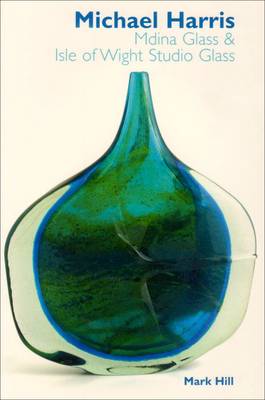
End of September my husband and I are going on holiday in Malta. As we don’t have a car there, I think there won’t be a lot of thrifting, but we are going to Mdina by bus, and I’m guessing there will be some antique stores in Valletta (if you have any tips, let me know!). My dad has been collecting glass for a long time, mainly Scandinavian, but he also has two beautiful fish head vases by Michael Harris for Mdina. I would be thrilled if I could find one in Malta, where they were originally made, so he can add it to his collection.

Afbeeldingsresultaat voor michael harris mark hill
Fish head vase on the cover of Michael Harris, the book by Mark Hill

Seeing this is my bucket list, it also needs some West German pottery on there. I’ve mentioned before that I collect Roth Keramik. They are still the ultimate Fat lava. Although my aunt and uncle, who also have the thrifting bug, have found not one, not two, but THREE Roth vases in the wild, I never was so lucky. I did find the one below on a flea market, but it is cracked (I still brought it home, because it is one of the rare blue vases!). For my bucket list I don’t mind which color it is, any would be nice :).


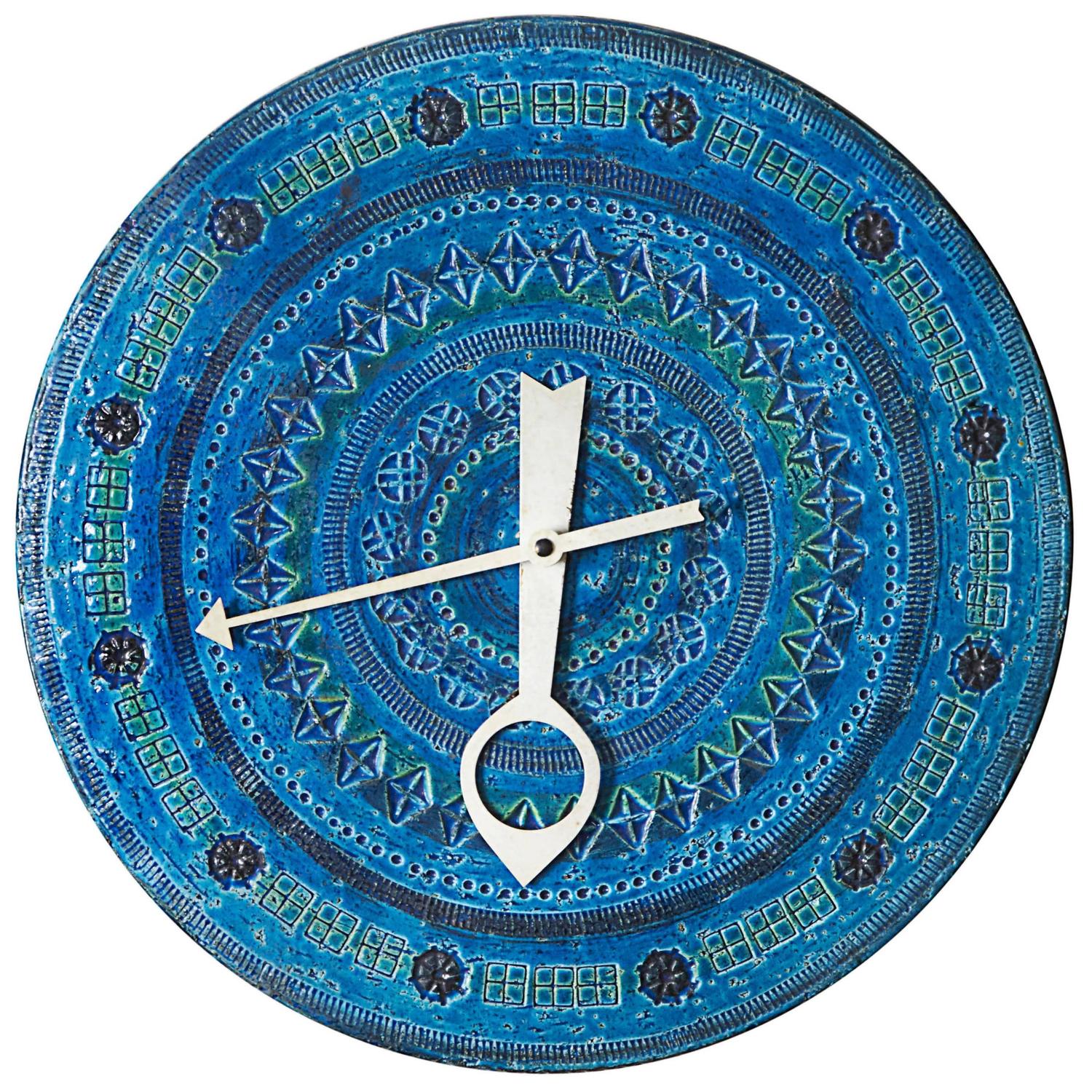
I’m a huge fan of Bitossi. Over the years I have found plenty of vases, bowls, and even some animals, but I have never found a clock. There are a lot of cool patterns, so it is difficult to choose. Perhaps the traditional Rimini Blu has my preference, as it is such an iconic and recognizable décor.

Afbeeldingsresultaat voor bitossi clock rimini
Sorry.. not my pic. See source here.
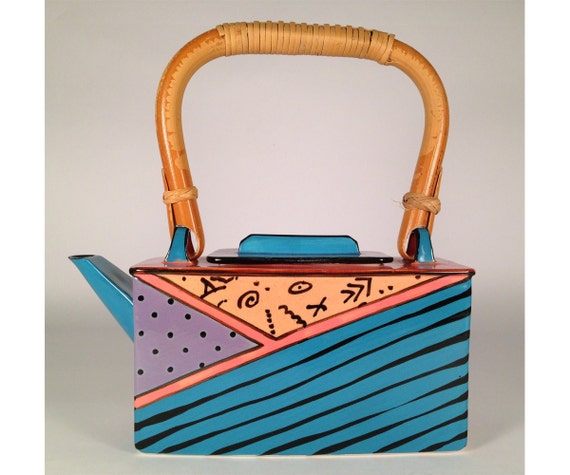
Over the years I have picked up the occasional piece of Rosenthal Flash, designed by Dorothy Hafner. But did you know she also made her own studio ceramics? Especially her teapots are amazing. It seems like most of them were sold in the US, so the chances of finding any here are small, but stranger things have happened.

Dorothy Hafner handmade porcelain teapot rare 1980s Memphis Style Postmodern design hand signed in glaze mint condition never used
Sorry, not my pic. See item for sale here
The final item on my list, for now, would be something – anything – by Memphis Milano. I first learned about Memphis and Sottsass during my internship at Christie’s, and it has been true love ever since. The auction I worked on contained a large collection of Memphis Milano items, and they are just amazing. They’re crazy, colorful, fun. So different from anything I had seen before. I saved the money I earned from my internship and bought a Martine Bedin Super Lamp (not the original eighties one from the auction, that was too expensive, but an official re-issue).
The lamp still has pride of place on my granddad’s antique writing desk. Whenever we have people visiting us for the first time it is a great conversation piece.


I know that the chances of finding a piece of furniture, or even a lamp thrifting is extremely small. However, Memphis Milano also made cool pottery, glass, fabrics and jewelry. It might be more realistic to find something like that!
I think I’ll stop here… I could go on for pages, as there are so many cool vintage treasures. But these are the ones that would make my heart skip a beat.

Let me know which items are on your list. I would love to know!

Wednesday, 13 January 2016

Blink! An Ystad Metall Candelabra

A few weeks ago I read the book Blink by Malcolm Gladwell. It's a great book, certainly a recommendable read. It explains the different sort of snap decisions we make, and how they can influence our behaviour in a positive or negative way.

The book begins with a case of an old Greek statue, a Kouros, that is brought to the J. Paul Getty Museum in California. The statue is presented to the museum, they really want to purchase it, but as it costs an enormous amount of money, they research it extensively. After their research they decide the statue is the real deal, and buy it. But, shock and horror,  when some of the specialists in the field later see the statue, they instinctively know that it is a forgery.

So, how does this relate to Fat Lava? It very much reminded me of the process of "hunting" for goodies on markets. When I'm scouring stalls for Mid Century Modern, I know in a split second if there is something interesting for me. Even if there are more than a hundred items on the table, I'll spot what I want immediately, sometimes from three rows across the hall.

The amazing thing is that this also works with items I have never seen in real life before. Last weekend I was at a market, and from the corner of my eye I spotted this beautiful candleholder by Ystad Metall.

I had only seen images of this online, but it is very high on my oh-how-I-wish-I-will-come-across-one-of-these-in-the-wild-list. And there it was! As Malcolm Gladwell describes, in less than a second I knew what it was, and that it really was a Ystad candlestick.

And it is every bit as beautiful as I imagined. The only thing that surprised me is that it is slightly lighter than I anticipated.

The candlestick was probably designed by Gunnar Ander*, somewhere in the 1960s. Gunnar Ander was a Swedish designer, that lived from 1908 to 1976. He mainly worked for the Lindshammar glass factory, but was also active for Ystad Metall for a while.

Although I cannot confirm this with certainty, the glass discs in the candelabra are attributed to Kosta Boda, and possibly made Erik Hoglund. It at least is mentioned that Kosta Boda produced glass for Ystad, so it is likely that these were also made by them.


For me, the combination of the translucent glass and the dark metal are what makes this such a strong design. It's a bold and modern piece. The piece is marked Ystad Metall on one of the legs.

For now (although it might at some point become available in the shop) it lives happily on my beautiful antique writing desk, between part of my collection of Roth vases, and a Super lamp by Martine Bedin. I think it compares well with these iconic designs.


*I believe this is his correct name, but I also see his name described as Gunnar Anderssen or Andersson in places.


Sunday, 22 November 2015

Pieces of the Puzzle

I know, I know, I just said I didn´t have time to blog... but I had to share this! 

Almost every "thrifter" I know has a list of ultimate finds. It contains items that would make your heart skip a beat if you would come across them in real life. Let alone if they are afordable too!

I practise my poker face every morning in the mirror (I can tell you, I need more practice), just so the dealer on the other end of the table doesn't know I am dying to buy their item.

The top spot on my list will always be a blue Roth vase. In imaculate condition. (Ha, like that's ever gonna happen!)

Furthermore, my top 10 contains a Ruscha 313 in Volcano glaze, Riihimaki uranium pieces, and a Bitossi puzzle vase. I love the wax technique that was used to create the puzzle pieces, and the colors are just great. It's a very sophisticated, but incredibly seventies colour scheme.

So... lo and behold what I found yesterday!


Isn't it wonderful? Added bonus is the beautiful shape. The decor works great on the circular body. It's a great design. I believe the design was by the great Aldo Londi. 

Sadly, I'm not allowed to keep it. We have strict collection rules, only Bitossi animals are allowed permanent residence in our family. Therefore, it will soon go in my Etsy shop. But yes, my heart did skip a beat when I spotted it.

Thursday, 19 November 2015

Eye candy

It's a bit of a blogging cliche, but I don't have a lot of time to write new posts at the moment. But I do have some eye candy to share! We have moved house this summer, and I now have an entire attic that I can fill with vases. I'm such a happy camper! 


And this is only the beginning. I'm still sorting through boxes that were stored at my parents house and deciding what may stay and what will be sold. So if you're interested in West-German pottery, keep an eye on the store. I've already added part of my Es-keramik collection, but there will be plenty more!


Sunday, 6 September 2015

Teenie Weenie Polka Dots

West-German pottery is such a fun subject, as I'm always learning new things and making new discoveries. A while ago I encountered a factory that was unknown to me: Vereinigte Zeller Fabriken Georg Schmider. I know that's a whole mouth full, but their work is a lot more fun than the name.

The vase that started my new passion is this bad boy:


I love it. It just makes me happy looking at it. I can't imagine anything like that being made nowadays. It is just so mid century, so pop art. I do think it's the glaze that makes the vase, as the baluster inspired shape is actually really traditional.

Fast forward to two weeks ago: returning from their trip to the UK, my parents brought me this fantastic set of animals.


Doing some research, I found out these are also by Zeller! They are absolutely fantastic, so much fun. I specifically love that they are so humorous and colorful. Perfect example is the face of the fish:


So, what do we know about these, apart from how great they are?

There has been a pottery as early as 1794 in Zell am Harmersbach in Germany, in 1898 the factory that produced the wares above was taken over by Georg Schmider. In the early 20th century they produced a lot of traditional faiance, also some beautiful pieces in the Art Nouveau style.

In 1950 the factory hired Anneliese Beckh. A brilliant move as far as I'm concerned, as she designed all the pottery until 1983, including these lovely colorful bits.

Anneliese Beckh was also responsible for the cool Scoophead cats made by Zeller. I don't have any of them in my collection (yet!), so no pictures, but if you would like more information on them, there is a lovely Facebook group, which you can find here.


Sunday, 31 May 2015

I'm in the 313

The longer I've been collecting, the more I'm drawn to the ceramics made by Ruscha. Something in their designs is so elegant, especially those from the sixties. And where I loved bright colors and thick, runny fat lava when I started my collection, I now enjoy the slightly more subdued, earthy tones used by this factory.

In an earlier post I already showed my own collection of vases with the Vulkano glaze, in this post I want to highlight the 313. I think it is rightfully the most famous shape by Ruscha.

I mean, look at it! It's so elegant!


The vase was designed by Kurt Tschörner in 1954. The 313 went through a lot of transformations.

Somewhere in the 1960s, Ruscha decided that the model needed to be changed. The handle got thicker. I suspect this made the jug easier and cheaper to produce, maybe it also prevented that a lot of the vases from failing in the production process.

Later in it's history both the handle and the spout got bigger, which distinctly changed the form of the vase.


The 313 comes in many glazes, well over a hundred I believe. There is a great Facebook page displaying these wonderful glazes. These were produced until quite late, possibly as late as the 1990s (I think this brown/gray version might well be from that age).

Forrest Poston wrote a great article about the 313, where he discusses the changes in shape in more detail. You can find it here.

I would love to own a 313 with the original shape one day, with Vulkano glaze. Decor Filigrain would be fine as well... a girl has gotta dream, right?


Saturday, 27 December 2014

It's About Time


Last year I wrote about finding my first West-Germany clock. After that first lucky hit, I found many more beauties. I have to admit that my first find is still my favourite, and I haven't found any more examples by Carstens. Lately however, I've come across a number of clock bodies which were produced by the company Herbolzheim Keramik.

Herbolzheim Keramik must be one of the unsung heroes of West-German pottery. As far as I know there isn't any information available about the company. Apart from the fact that the factory was established in…. you guessed it… Herbolzheim, there is just nothing, nada! (If you have any information, I would love to know!) But they were prolific producers of West-German pottery.

I did manage to find out (by checking a lot of online listings) that the company seems to only have produced kitchenware, mainly cake plates, and many, many bodies for clocks. I also found a few wall plates, which were based on the designs for the clocks. Not a single vase in sight!

It looks like they started producing kitchenware, as a lot of it has the typical pastel 50s/60s colours. I love the clocks though, as they are über seventies! The glazes are fantastic: oranges with reds, yellow with blue, lime green on a forest green background. Wow! These clocks are very vibrant.

Most are based on a rectangular shape and are cool because of the glazing, but some have fantastic shapes as well.

Herbolzheim probably delivered the clock surrounds to the factories who produced the mechanism. I So far I have seen a number of factories such as Quarz, Quartz, Zentra, Junghans and others all use the ceramic bodies by Herbolzheim.

The best thing about these clocks is that they are so usable! When you reach that point where your house just cannot contain another vase (and most of us West-German pottery collectors know this feeling), you can go looking for one of these clocks. Every house needs a clock, right?


Tuesday, 30 September 2014

A Mountain Backdrop

I've just returned from a lovely holiday in Austria. Normally when I'm on holiday I might visit the odd antiques shop, but as my husband and I often go to destinations where you have to fly, there isn't really the opportunity for buying vintage items. This time we travelled by car, and there was a flea market near our hotel on Sunday, so we decided to check it out. It turned out to be a really good one, with lots of stalls and plenty of private sellers. And isn't this the best view at a flea market, ever?


We've found some lovely things at this first market. From left to right: A Goebel ceramic fish money bank, two Rörstrand tea or coffee jugs in the pattern Irene, a Bitossi vase in the decor Sahara, a glass elephant paperweight (which is marked, but I haven't figured out who made it), and a blue Bay vase.


The first few days we had lovely weather, but later on in the week it started to rain. As we weren't able to go biking as planned because of that, we decided to do some more hunting. We visited a number of antique malls/halls and charity sales in the area. Again, we came up with a pretty good haul!

From left to right we found a ceramic lantern by one of the West German factories, a Holmegaard candle holder, a Bay Fat Lava vase, a Ceramano jug (sadly, damaged at the handle), and a large yellow Sklo Bullet vase.


At a charity sale for a local animal shelter we also found this beautiful cup and saucer by Weimar Porzellan in kobalt blue, which is weirdly also marked by Goebel. I discovered these are called a Herrengedeck or a Fernsehgedeck in German. The saucer is extra large so it can contains some cake or cookies. Very convenient!


The day before we left we visited one more antiques hall near our hotel. This hall was full of little stands and small shops and opened every sunday morning. We had to get up pretty early to fit it in our schedule, seeing we also had to drive the 1000 km home, but we weren´t disappointed!

Again, from left to right: a Scheurich 414-16 with fab blue and black crusty glaze, two teak vikings, one carrying a massive spear, a small glass elephant by Bertil Vallien, a Sommerso Murano vase in blue and yellow, a Bavaria Porzellan trinket box, a Baller bronze donkey/zebra, possibly by Walter Bosse, and a Scheurich vase with a beautiful blue and yellow glaze.


We were just about to leave when we spotted one more store around the corner. As a cherry on the cake this shop contained a fab shaped Bertoncello vase and one of the best Nierentisch I have seen in a long time!


Most of these items will be for sale in my Etsy shop, which you can check out at www.etsy.com/shop/Vaseomania

Wednesday, 10 September 2014

Cattails

Hello dear reader! It has been an eternity since I last posted an article on my blog. I didn't go away in the meantime, but life got in the way! In addition to my online store on Etsy, I landed a full time job as a technical writer for a healthcare IT company in May. It's the most wonderful thing for me, because I get to do what I love all day: writing! It just meant I had to take a step back on my extracurricular activities for a while.

But I'm back! And I'm taking up where I left off, namely with Royal Copenhagen. Ok, ok, I know this isn't Fat Lava, and I promise I will do a post on German Pottery again soon, but I do love myself a piece of Scandi Pottery.

Two weeks ago I was able to pick up the most amazing set of three Royal Copenhagen vases. I figured they were by Nils Thorsson, as they were clearly from the Fajance series, but something in the bright yellow that was used in the decoration made me doubt this. After checking the signature on the bottom of the vases, I realized the decor was designed by another artist: Ivan Weiss. I haven't been able to confirm it, but apparently the decor is called Trina.

Ivan Weiss had an interesting career. Born in 1946, he started working at Royal Copenhagen in 1962 when he was just 26 years old. He started by learning to become an overglaze painter. He must have been good, because in 1966 he worked and studied with Nils Thorsson, until he left for Japan in 1970. He studied in Japan for 2 years.

When he returned to Denmark, he resumed work at Royal Copenhagen. I think this must have been when he started designing his own decors for Royal Copenhagen. It must also have been the time when the decor on these vases was designed.

He indicates that his designs are influenced by an interest in calligraphy and an absence of symmetry. When I look at the decor on these vases, I can easily imagine the gray strokes are inspired by traditional Buddhist calligraphy of Kanji.

What I especially love in these vases is the balance in the colors, the balance between light and dark tones. The yellow and brown work wonderfully together, but the silvery gray brings the decor to a whole new level. It is amazing how he can achieve such a beautiful look with basically two large strokes of color, accented by details in a third. When I look at these vases, they remind me of Cattails standing at the waterside in autumn sunrise.

In an interview, Ivan Weiss once said about his decors that they are "a landscape which you can enter and dream, disappear in." What a poetic way of thinking about these lovely vases. As long as this set is lodging with me I'll gladly gaze at them and dream of Cattails in the golden Indian summer light.